Redeye VC

Josh Kopelman

Managing Director of First Round Capital.

espite being coastally challenged (currently living in Philadelphia), Josh has been an active entrepreneur and investor in the Internet industry since its commercialization. In 1992, while he was a student at the Wharton School of the University of Pennsylvania, Josh co-founded Infonautics Corporation – an Internet information company. In 1996, Infonautics went public on the NASDAQ stock exchange.

Read more or visit First Round Capital

On Age...

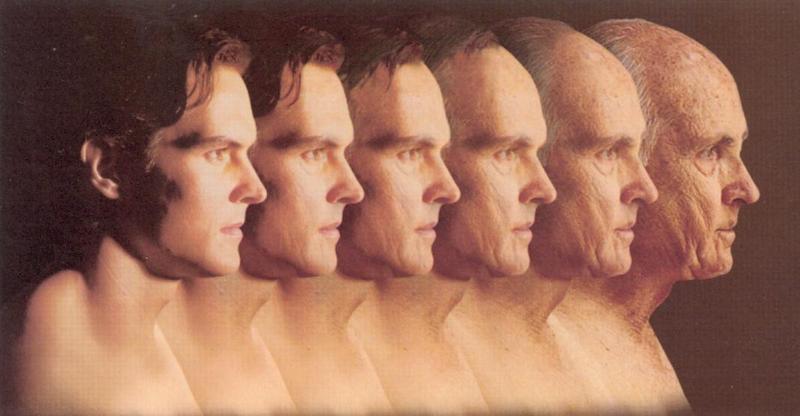
Pg_41e___man__showing_progressive_aI've been thinking a lot about age recently.  As my age catches up to my rapidly graying hair, I'm realizing that I'm no longer the youngest guy in the room...

Today, Business Week released their list of "Tech's Best Young Entrepreneurs", where they highlight eleven "of the tech industry's most promising players aged 30 and under...whose ideas and innovations are likely to make the biggest impact on technology in the coming years." 

While I have always said that my fund, First Round Capital, seeks to invest in incredible entrepreneurs, I was amazed to learn that we had funded 4 of the 11 finalists.  So, while I'm still coping with the fact that I'm too old to make any "young" list myself, I can take comfort in the fact that we had backed more than a third of the finalists.

Congratulations to:

1-800-FREE-411 and Pennsylvania politics

Free411logo As a Pennsylvania resident, I was really surprised by today's announcement from portfolio company, Jingle Networks.  The company, which operates the country's largest free 411 service (1-800-FREE-411), recently conducted a political poll.

Now this was not your typical poll.  Typical polls contact just 500 - 1,000 people.  Because Jingle gets calls from almost 20 million callers a month, they were quickly able to poll 24,000 likely voters in Pennsylvania.  This makes it one of the largest samples ever used in a political poll -- with an error level of less than one percent.

And the results were pretty surprising.  Among those making a choice, the results show Barack Obama leading Hillary Clinton by 57 percent vs 43 percent.  These results are strikingly different from traditional polls (for example, a recent LA Times / Bloomberg poll shows Clinton ahead in PA by 5%).

George Garrick, Jingle's CEO, comments that "a key factor contributing to error in poll predictions is the undecided voter sector. In Pennsylvania, 25 percent of voters are still saying they are "undecided" and that could easily produce a last minute turnaround from one candidate to the other since the undecided sector is larger than the differences being cited in any of the polls. If the small sample size used in a typical poll does not perfectly represent the larger population, it's possible to see a very different result in the actual vote. That's why using a significantly larger than normal sample size is interesting."

It's always neat to see new technologies used in unanticipated ways...

The UNfunded

April_foolOver the last several years, April Fool's Day has been moving online – and although we’ve seen online pranks from startups, bloggers, and large Internet companies, I’ve noticed relatively few from venture capitalists.  (Insert sarcastic comment about VC’s lack of sense of humor here).  So, I thought I’d try to join in this year. 

One of the investment themes we’ve been following this past year is the rapid growth of user-generated content.  And a creative example of user-generated content in the venture industry is TheFunded.com – a site where entrepreneurs can leave anonymous feedback about their experiences with venture capitalists.  So, I thought it would be fitting to launch TheUNFunded.com for April Fools – a site for VC’s to provide anonymous feedback on entrepreneurs.  I intentionally wrote such outlandish reviews of fake entrepreneurs, and I expected everyone to immediately realize it was a joke. 

Michael Arrington “broke the story” about TheUnFunded.com yesterday on Techcrunch, and the site quickly benefited from the Techcrunch Bump.   And while my little prank surely won’t make the 100 Top April Fools Day Hoaxes of all time, the responses provided an interesting perspective on people’s attitudes (and predispositions) towards the venture industry.  While there were several people who recognized the April Fool's Day satire, I was surprised to see that many people assumed the site was real.  And their reactions on Techcrunch and blog posts were very revealing.  Heck, even VentureBeat (which covers the venture industry professionally) fell for it.  My favorite reaction comes from a del.icio.us user who tagged the site as “Funding, VC, Douchebags”.

The fact that so many smart people actually believed that such an outlandish site could be legitimate speaks volumes about the state of the relationship between entrepreneurs and venture capitalists.  Today's New York Times has a story which notes that "...recent research suggests that the experience of being duped can stir self-reflection in a way few other experiences can..."  And while I don’t want to read too much into a silly April Fool’s Day joke, I think it does shine a little light on the level of mistrust and ignorance within the VC/entrepreneur ecosystem.  I don’t know if I am more surprised by the fact that entrepreneurs fell for the hoax – or that the site received over thirty membership requests from legitimate VCs.   (Don’t worry guys, I won’t publish your submissions – just make sure you mark up my next hot deal;-)

Just to be clear, TheUnFunded was a joke.  A parody.  No actual entrepreneurs or companies were reviewed on the site.  I genuinely like TheFunded.com – and think it provides some much needed transparency in the venture industry.  No hidden message here -- just a recognition that sometimes everyone takes themselves a little too seriously...

Now that April Fools is past, I’ll be shutting down TheUnFunded.com later this week, and giving the domain to Adeo at TheFunded to use as he sees fit.  Thanks to both Michael and Adeo for playing along… 

I Don't Know...

Dontknow I don't know.

Why is it so hard for people (including both entrepreneurs and VCs) to say these three words?

This past week I had two distinctly different meetings with entrepreneurs.  They both were successful serial entrepreneurs.  Both were exceptionally smart.  Both had good ideas.

The first entrepreneur, however, thought that they were expected to know the answer to every question.  There wasn't a question I asked that he didn't have a definitive answer to.  He knew what their pricing model would be.  He knew why Google would never compete with them.  He knew what their consumer churn would be three years out (despite the fact that they hadn't launched yet).  Whenever I tried to discuss the different risks in the business, he told me why they didn't exist. 

The second entrepreneur, had a different approach.  He definitively stated answers when he had them, but when he didn't know he said so.  When asked about his pricing model, he said "well, we're considering a few different options depending on the outcome of some tests we're running..."  When asked about cost of customer acquisition, he said "well we don't know what our numbers will be...but here's our model based on other comparable companies."  When asked about risks, he identified several -- and then we discussed how to reduce/eliminate them.

I've come to believe that a key investment criteria is founder credibility.  And, I think the second entrepreneur was far more credible.  No one expects a pre-launch company to have all the answers.  (In fact, we get scared if you think you have them).  As I've previously discussed, rather than have an entrepreneur sell me on why they are 100% correct, I'd much rather understand how they are attacking the different risks facing the business.

And, by the way, the same applies for venture capitalists.  I often feel that during company pitches -- and board of directors meetings -- we're expected to have an immediate opinion.  Should we double our marketing budget?  Should I hire this person?  Will this strategy work?  While it's OK to offer opinions and thoughts, I think it is also appropriate to acknowledge uncertainty.   

Why do people feel pressure to have an answer for every answer?

I don't know...

Feed Frenzy

1929488434_5cca933099 Back in the early 90's, I co-founded a company called Infonautics that ran an online service called Homework Helper.  It operated on Prodigy and AOL -- a few years before the development of the web browser.  We ran our own data center (the Rackspaces of the world didn't exist) and staffed our network operations team 24x7.

I remember being amazed by the network operator's job.  Given the complexity of the system, the network operator would receive dozens of emails per hour, informing him of the status of the various systems and components.  Emails with subjects like "Server load at 87%" and "Query queue at 43" or "Warning: Disk space on Server43 at 95%".  Most of those emails didn't require action, but the network operator had to review them all in order to find the important ones.  In a typical day, I'd guess the netops desk received 2,000 - 4,000 email updates.

By the time I left Infonautics in 1998, the system had evolved.  Instead of the systems reporting to a human via email, we adopted a SNMP dashboard.  This was a piece of software that automatically received (and sometimes acted on) data from the different systems (such as "free memory", "system name", "number of running processes", "default route").  And this level of reporting (and the ability to act on it) eliminated the need for a night-shift network operator.

Fast forward a decade to 2008.

Over the last six months, it seems like every web site is adopting the notion of a "News Feed".  These feeds keep me informed about the status/actions of all my friends and relationships.  I have a Facebook News Feed.  I have a Twitter Feed.  I have a LinkedIn Feed.  And even more recently, a new category of products called Feed Aggregators have arrived.  These aggregators, such as FriendFeed and SocialThing, allow you to track your feeds across multiple sites.  There has even been a spoof site that aggregates the aggregators.

I love the concept of the News Feed.  I think it is an early implementation of the Implict Web, helping to break down the data silos.  However, I'm now receiving hundreds of feed updates a day.  And with the combination of (1) more users activating feeds and (2) more web sites offering them, I think that feed volume is poised to increase exponentially.  And I can sense that, just like at Infonautics in 1994, the volume will increase to a level that will require 24 hour vigilence to remain informed. 

So, the question I've been thinking a lot about lately is:  What happens next?  How does the feed concept scale -- without forcing people to hire their own netops team to watch the feed.  And I've come to two rough conclusions:

1.  Feeds 2.0 = the feed dashboard

Just like SNMP allowed us to build an automated dashboard to monitor the status of different connected devices, I think it's logical to assume that web services will develop to allow us to monitor the status of connected people.  I'm not talking about a chronological data dump of text like the current 1.0 feed aggregators.  I think there will be applications which aggregate, interpret, and act on feeds.  This dashboard will collect the thousands of feed emails, and determine which require action, which are important, and provide the user with a level of abstraction that currently is not there.

2.  Walmart wants to be your friend

As I've been thinking about the Implict Web, I've seen a variety of technologies/standards (such as APML, Microformats, OpenId, Data Portability, OpenSocial) that are intended to help webservices talk with each other -- and break down the data silos.  However, I think we might get surprised here.

I think the real challenge with respect to the implict (or semantic) web is not technical.  Rather, it has to do with educating (and empowering) the user so they understand the privacy and control issues related to cross-application data sharing. 

And as more and more applications export events into News Feeds, I think we might find that the News Feed becomes a standard for cross-application information delivery.  Rather than trying to build semantic intent into a website or webservice, could we be better off collecting it from the news feeds?  Data is structured in a fairly standard format.  And most importantly, user permissioning and privacy controls are already built into newsfeeds.  Users understand the issue/decision involved in "Bob wants to be your friend".  Is it such a big leap for people to receive "Walmart wants to be your friend" or "Amazon wants to be your friend"?

If web sites -- rather than people -- were subscribers of my news feed, that would break down a whole bunch of silos. 
Amazon already knows how to take advantage of it's onsite user activity to enrich a customer's experience.  But if it can figure out how to utilize a user's offsite activity -- wow!

And privacy is still in the consumers hand -- just like how today I control (1) what goes into my feed and (2) who receives it.  If this vision comes to fruition, I think there the big opportunity is not for the company (or companies) that collects and distributes the feeds.  But rather, the big opportunity is for the company (or companies) that can turn the data into actionable, useful information.   

I'd love to hear your thoughts on this.  (And if there are any companies that are working to create the "SNMP for feeds", please contact me!)

Know anyone?

First Round Capital is looking for a Senior Associate possessing boundless energy and astounding intelligence based in either our San Francisco or Philadelphia office.  More information here and here.

FREE = Long Tail 2.0

Free_sign_med This month's issue of Wired Magazine contains a great cover story by Chris Anderson titled "Free! Why $0.00 Is the Future of Business" 

I think Chris does a wonderful job describing the rise of "freeconomics"  -- and is a must read for people thinking of shrinking a market.

It even contains a nice summary of my "Penny Gap" post:

From the consumer's perspective, though, there is a huge difference between cheap and free. Give a product away and it can go viral. Charge a single cent for it and you're in an entirely different business, one of clawing and scratching for every customer. The psychology of "free" is powerful indeed, as any marketer will tell you.

This difference between cheap and free is what venture capitalist Josh Kopelman calls the "penny gap." People think demand is elastic and that volume falls in a straight line as price rises, but the truth is that zero is one market and any other price is another. In many cases, that's the difference between a great market and none at all.

The huge psychological gap between "almost zero" and "zero" is why micropayments failed. It's why Google doesn't show up on your credit card. It's why modern Web companies don't charge their users anything. And it's why Yahoo gives away disk drive space. The question of infinite storage was not if but when. The winners made their stuff free first.

It appears that "FREE" will be the title of Chris Anderson's new book, due out in 2009.  I'm going to place my pre-order today.