Redeye VC

Josh Kopelman

Managing Director of First Round Capital.

espite being coastally challenged (currently living in Philadelphia), Josh has been an active entrepreneur and investor in the Internet industry since its commercialization. In 1992, while he was a student at the Wharton School of the University of Pennsylvania, Josh co-founded Infonautics Corporation – an Internet information company. In 1996, Infonautics went public on the NASDAQ stock exchange.

Read more or visit First Round Capital

Woulda Coulda Shoulda

Add this one to my woulda coulda shoulda list...

-----Original Message-----

From: Chad Hurley []
Sent: Monday, August 15, 2005 12:09 PM
To: Josh Kopelman []
Subject: Re: Great news!

Hi Josh,

Yes, it was great talking with you last week. We definitely would
like to have you on board with YouTube. Right now, we are just
exploring our options and I will let you know before we move forward
with any of them.

Chad

Demofall

I'm getting ready to head out to DEMOfall next week. I've had a long and wonderful experience with the DEMO conferences -- having founded or funded over 20 companies that have launched there.  It looks like Chris Shipley has identified a bunch of interesting companies this year as well - including First Round Capital portfolio company, Cuts.com (While the DEMO conference doesn't pre-announce the Demonstrator companies, the companies are free to announce their selection.  So far I've counted over 30 press releases from launching companies - check them out here).

If you're going to be at DEMOfall, drop me a note!

Companies launching at Demofall

Domino Rally Business Models

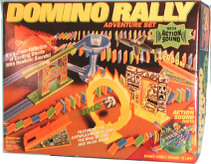
Domino_p1010008_cropped_45_4x5 As a kid, I used to play with a game called Domino Rally -- where you would spend hours setting up an intricate course of hundreds of dominos, with the hope that you can create a spectacular "chain reaction" at the end. However, if one domino was misplaced, the rally would be ruined...and you had to start all over again.

Today, as a VC, I've begun to see a trend toward what I call "Domino Rally" businesses. These are business models that require a number of disparate events to occur in order to be successful - and if any one event is missing, the entire business fails. 


"If we can negotiate a deal with the top 10 publishers on the Internet AND cost-effectively convince millions of users to install a co-branded plugin AND convince advertisers to buy a new form of advertising THEN we have a billion dollar business"

The problem with Domino Rally business models is that they tend to have a binary outcome -- everything either lines up perfectly or it doesn't work at all.  Even if each component has a high probability of a successful outcome (say a 75% chance of a positive outcome), the combined probability outcome for success is not high.  For example, "a 4-Domino" business plan's chance of success is .75 x .75 x .75 x .75 = 31%.
Moreover, most of these business plans require major up-front investment to get the company to the point where it is able to get visibility to the next domino.  (ie, it takes $1M to see if we can get the first domino to fall, and $2M to see if we can get the second, etc).


Rather than have a business model which requires all the moons to line up in your favor, I'd much rather see: (a) a business plan which has several different paths to success; or (b) a business plan where the outcomes of the each component has been tested or proven individually; or (c) a business plan which only requires one or two dominos to fall; or (d) if you still think your business needs multiple dominos, you can show how you can get there cost-effectively.


When we started Half.com our two major dominos were (1) can we get sellers to list inventory, and (2) can we get consumers to buy stuff. To offset the risks of the former, we went out and signed contracts with dozens of used book, CD and movie stores to list their inventory -- launching with over 1 million items available. To offset the risks of the latter, we launched with partnerships with all the major price-comparison shopping engines, providing us with quick access to millions of price-sensitive consumers.  While we didn't eliminate the risks, we were able to credibly convince our investors that we were able to position the dominoes in the right place.

Remember - If one domino is misplaced, your rally is ruined!

The M&A Lotto

Lottery In 2005, Google submitted a 10-K filing with the SEC which revealed that it had acquired nine companies and substantially all of the assets of another six companies. The combined purchase price for these 15 companies was equal to $130.535 million USD
(SOURCE: http://en.wikipedia.org/wiki/List_of_Acquisitions_by_Google)
2005 Google Acquisitions - 15


According to Wikipedia, Yahoo made 11 acquisitions in 2005 –and Yahoo’s 10K states that in addition to their investment in Alibaba, the purchase of the remaining outstanding shares of Yahoo! Europe and Yahoo! Korea, and the purchase of Verdisoft...Yahoo “acquired four other companies which were accounted for as business combinations. The total purchase for these four acquisitions was approximately $79 million…[and] the Company also completed immaterial asset acquisitions that did not qualify as business combinations.”
2005 Yahoo Acquisitions - 11


So why is it that every single startup that I see expects to sell to Google and Yahoo?


More people were drafted in the first round of the 2005 NBA draft than were acquired by Google and Yahoo. (Perhaps I should be scouting talent around North Carolina instead of Stanford?)


In fact, you have better odds of winning $5M in the NY Lottery than you do of selling your company to Google (or Yahoo) - in 2005, there were 19 prize claims of $5 Million or more in the NY Lottery. (Honest.  The information wasn’t readily available on their website – so I sent an email to them at questions [at] lottery.state.ny.us and they responded within an hour.)


Moral of the story – entrepreneurs should focus on building real, long-term value. An exit opportunity only exists if you build a company that has differentiated technology, a strong team, offers customers real value, demonstrates traction in the marketplace, and/or solves a real need for the acquirer. You can’t build a company to sell it – I’ve never seen it work. If you are playing the odds for a quick flip to Google or Yahoo, buy a lottery ticket.

Watch out Sand Hill Road...

First Round Capital is now on 1-800-FREE-411...Watch out Sand Hill Road!

Listen below:

An Odeo player sat here with a 64-second audio clip. Odeo shut down in 2009 and the recording was never archived.

powered by ODEO


(NOTE:  1-800-FREE411 and Odeo are portfolio companies).

First Round Capital News

ToplogoToday, First Round Capital announced that Rob Hayes has joined the team.  (More info here in pdf format).

Based in San Francisco, Rob will be our first West Coast Partner.  The addition of Rob (along with Chris Fralic who joined us in March) will greatly add to the depth of our team and our firm’s capabilities.


Rob comes to First Round Capital from Omidyar Network where he was their first venture investor.  He led most of Omidyar Network's initial venture capital deals and later built and ran the technology investing group.  Prior to joining Omidyar Network in 2004, Rob was at Palm where he started up their corporate venture fund.  While in that role he also managed the strategy effort around Palm OS that led to the spinout of PalmSource.  Rob started at Palm as product manager for the initial device-independent releases of Palm OS and was responsible for the versions of Palm OS on dozens of devices including the initial Treo products. 

I’ve had the opportunity to get to know Rob through our work on two Boards of Directors (Krugle and Feedster) over the last few years and know he will be an extremely valuable addition to the team.  Welcome Rob! 

After all is said and done, more is said than done

Success "After all is said and done, more is said than done."
Aesop 620 BC-560 BC

"A vision without the ability to execute is a hallucination."
Steve Case, former AOL CEO

When I first meet with an entrepreneur I have to make some pretty quick judgments about the individual. Does he or she have credibility? Do they seem smart? Do they have experience starting a company? Do they have integrity? Are they a good leader? It's very hard to make these judgments in a short period of time. If the dialog continues over the course of a few meetings, the added interaction provides additional data points. If we proceed even further, reference checks add significant value.


However, one of the most important criteria I need to asses is the entrepreneur's ability to execute. Can they do what they say they are going to do? If I am truly investing in chefs (not ingredients), then I need to be comfortable that they can really cook.

So - how does a VC get comfortable with an entrepreneur's ability to execute? When I look at my current investments -- and try to separate those companies that are thriving versus those that are struggling -- a few things stand out.

There is greater risk (and variability) in first-time CEOs than in serial entrepreneurs.
While there are some first-time CEOs in my portfolio that are doing unbelievably well, there are also some first-time CEOs that are struggling.   The serial entrepreneurs in my portfolio, on the other-hand, tend to have less variability in their performance. So while past performance (or experience) is not always a determinant of future success, it sure helps!

Just say no.
One of the most challenging jobs a CEO faces is to determine what opportunities/projects to say "NO" to. Given the limited resources that a startup has, it is critical for an entrepreneurial CEO to have real discipline in prioritizing projects. If a CEO can't make tough trade-offs, it has a direct impact on the company's ability to execute.

It's all about the team.
The first 25 hires at a startup are CRITICAL! They will set your culture. They will be the reason you reach (or fail to reach) your milestones. They will be responsible for hiring everyone else. One of the most dangerous mistakes a CEO can make is to accept "compromise" candidates because of time pressure. A strong team is critical to strong performance.

A culture of accountability.
Is there a culture of accountability?  Is there clear operating plan with  monthly/quarterly/annual goals/milestones?  Does the CEO hold him/herself and their team accountable for commitments?  Is there a dashboard to track key metrics? Are they disciplined about forecasting (using a waterfall revenue forecast)?  There is a clear correlation between CEOs who hold themselves accountable to goals and their ability to execute.